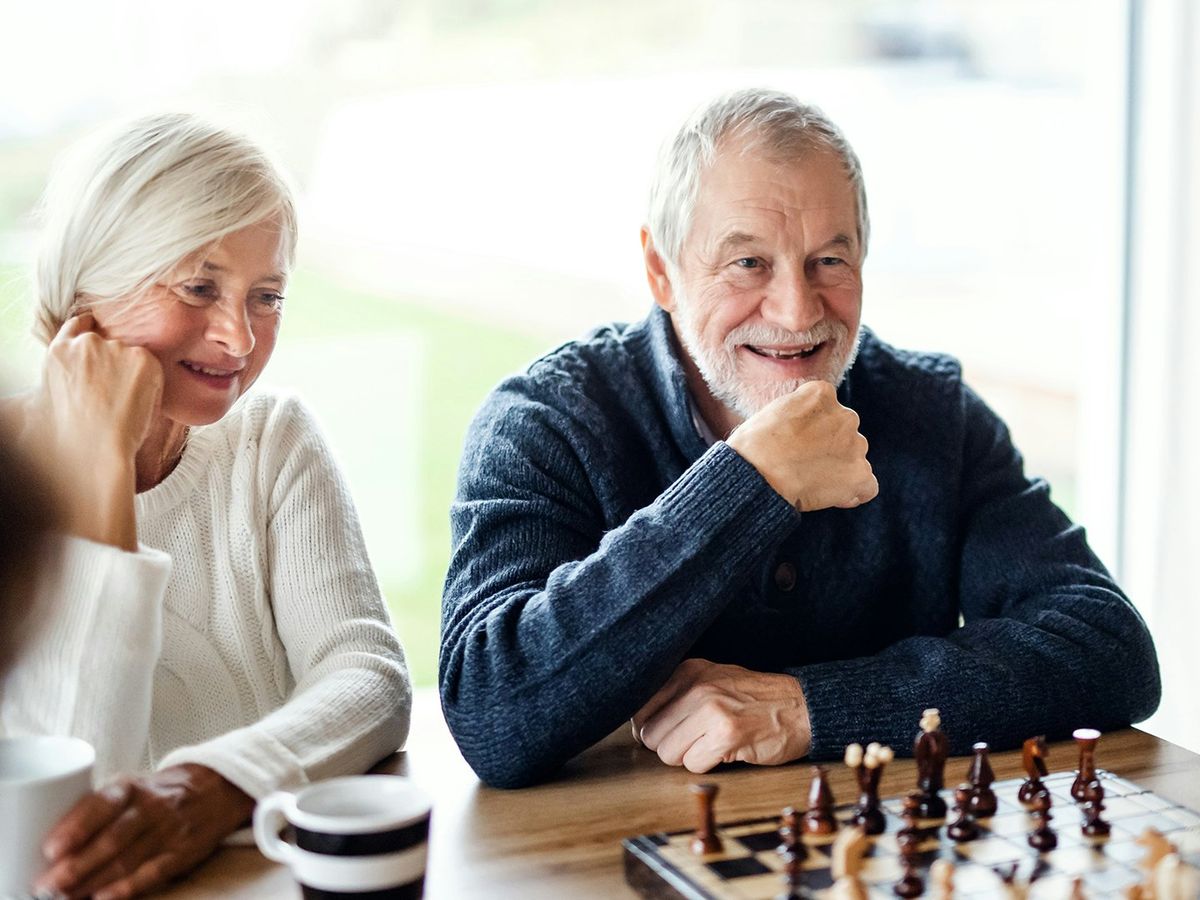
Dementia and isolation are the defining challenges of our time. We respond with community. We preserve the brilliant minds of adults over 65 through the timeless game of chess, meaningful dialogue, and storytelling.
When Was the Last Time Someone Asked You a Question and Genuinely Waited for Your Response?
For one in four adults over 65, the answer is far too long ago. This silence is more than uncomfortable. Social isolation is linked to about a 50% higher risk of dementia.
Each part of our program responds to one risk in the data. No game can cure dementia, and research on chess itself is still growing. We say so plainly.
The riskOur responseWhat the research says
The risk: Isolation
Our response: The Feeling Seen Effect
Being truly listened to is good for the brain, not just the heart.
Social isolation is linked to about a 50% higher risk of dementia and is one of the 14 modifiable risk factors named by the 2024 Lancet Commission. Regular, meaningful contact keeps people talking, thinking and engaged, and being accurately understood by another person is associated with lower stress and a greater sense of belonging. That is why connection sits at the heart of every session.
The risk: Cognitive Decline
Our response: The Chess Effect
Strategic play works like interval training for the brain's planning systems.
What the research says: Board games were among the activities linked to lower dementia risk in 469 adults over 75. NEJM, 2003 (opens in a new tab).
Strategic play asks the brain to plan, hold options in mind and adapt, skills that are often among the first to change with age. Board games were among the activities linked to lower dementia risk in 469 adults over 75 (NEJM, 2003). In 10,318 adults aged 70 and over, regularly doing mentally active things such as games, cards and puzzles was linked to a 9–11% lower risk (JAMA Network Open, 2023). These studies show links, not proof that chess prevents dementia.
The risk: Lost Identity
Our response: The Reminiscence Effect
Telling your life story strengthens who you are.
What the research says: 22 trials, 1,972 people: small but real gains in communication and mood, with no harms. Cochrane, 2018 (opens in a new tab).
Reminiscence means sharing memories of your life, often prompted by photos, music or familiar objects. A Cochrane review of 22 trials with 1,972 people found small but real gains in communication and mood, with no harms (2018). Results vary between studies, and we report them that way.